Tuesday, 22 March 2016

#ReadaPlayaWeek: By the Bog of Cats...

Plays, of course, are meant to be seen and not read, but it’s not always possible to see every play. They are not complete on the page, certainly in contemporary theatre where plays can be more collaboratively made than ever before. However, it encourages us (and hopefully others) to read more widely. For the third year, here is our #ReadaPlayaWeek initiative. And, as achieved in 2015, we shall try to choose 26 male playwrights and 26 female playwrights for our play choices.

Week 12: Marina Carr’s By the Bog of Cats… (1998)

Waking the Nation, the Abbey Theatre, Dublin’s 2016 season (marking the centenary of the Easter Rising) includes 18 men and only 2 women in a list of writers and directors involved. The male-centric season possibly reflects the general marginalisation of female voices in Irish theatre, a point that Sara Keating argues here.

By the Bog of Cats… by Marina Carr, considered to be one of Ireland’s leading playwrights, premiered at the Abbey in October 1998. It’s a poetic re-working of Medea, steeped in Irish myth.

The play (which has a largely female cast) focuses on Hester Swane, some sort of gypsy – or Tinker – who lives in a caravan on the bog of cats. A troubled woman to say the least, she is being forced to move out of her cottage and back into her caravan by the father of her daughter because he’s getting married to a younger, wealthier woman. Furthermore, she spends the nights wandering the bog pining for her mother who walked out on her during childhood. It’s on one of these night time walks that we first meet Hester in what is a striking opening scene: Hester walking across snow dragging a dead black swan behind her, its blood smearing the white snow red. It’s here that we are also introduced to myth and the uncanny in the play. Hester was once told by her mother that she’d live not a day longer than the black swan that she’s just found dead the previous night. Across three acts, we see her life spiral to its end, as she drunkenly breaks off relationships with her neighbours and Kilbride (her former lover), and destroys her home and farm. At the end of the play, as her story starts to mirror Medea’s, it’s not out of a hatred that she kills her daughter, but more because she doesn’t want her to live pining for her mum in the same way that she did.

There’s another play which By the Bog of Cats… reminds me of: Jerusalem. Both plays are set outside in an ‘edgeland’ area. Both have protagonists refusing eviction and who live in a caravan. And both have myths and folklore running right through them which make them so fascinating. In By the Bog of Cats…, like Jez Butterworth’s Jerusalem, the land has a mythic supremacy over the people living on it. One character, only known as Catwoman, lives in a turf house on the bog and says she can predict things. She claims to ‘know everythin’ that happens on this bog. I’m the keeper of the Bog of Cats… I own this bog’ (Carr, p.271). It’s implied that because she’s “of the land”, she has a power that other people don’t possess, not caring for meretricious things such as land and wealth which the farmer Xavier treasures. Furthermore, Hester claims to be magical herself: ‘things go through my veins besides blood’.

Tonally, the play feels uneven. The second act is set after Kilbride’s wedding and it almost could be from a different play. That doesn’t mean it’s not as good as the other acts; in fact it is a hilarious scene which includes the mother of the groom, dressed in a bridal gown, giving a self-indulgent speech; a priest who doesn’t know who he’s just married; and a penny-pinching father of the bride. A sense of myth and mystery in Irish theatre (such as that in The Weir), I feel, can often be more powerful when it is subtle. In By the Bog of Cats…, by contrast, Irish folklore, Greek myth, ghosts and ghost watchers make for an overwhelming sense of the mythical. This would perhaps be more effective if there was higher specificity of place grounded in the play. In Jerusalem, and maybe the issue is that I keep referring to this very different play despite its similarities, references to nearby (real and fictional) places and allusions to popular culture make the intangible and mythical all the more uncanny and strangely believable. In Carr’s play, although there is a strong sense of place, it is never quite clear where (or indeed when) it is set.


But overall, By the Bog of Cats… is a play brimming with warm humour, memorable female characters, theatrical and poetic images, and an enduring myth at its centre.

Monday, 21 March 2016

The Nap

Crucible, Sheffield

19th March, 2016, matinee

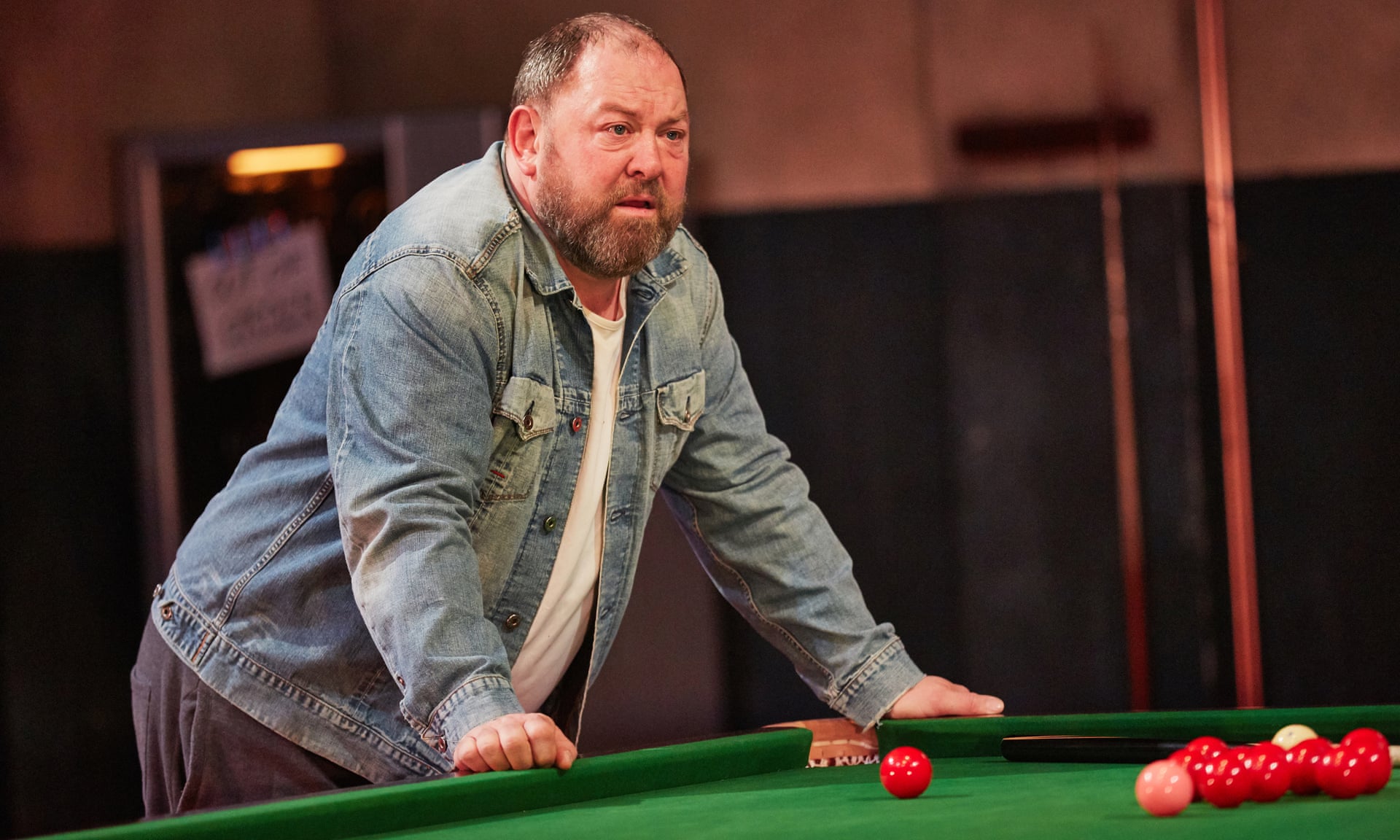
The Crucible – home to the World Snooker Championship – is the perfect space for Richard Bean’s new play about snooker match fixing. Through blending snooker fans and theatre fans, this production creates an immersive, sometimes tense, theatre experience.

In many ways, Bean has gone back to his roots with The Nap. Richard Wilson is directing, who oversaw Bean’s earlier work. It’s a return to a northern setting from which his work has since occasionally moved south. Finally, the snooker scenes in The Nap have the same fascination as his work plays such as Toast and Under the Whaleback.

We’re in a snooker hall in a rough part of Sheffield: the door doesn’t shut, a pain of glass is boarded up, and the vending machine is out of order. Yet the snooker table stood centre stage is perfect (we later hear that nothing is as flat as a snooker table and nothing as round as a snooker ball). In walks Dylan, a young snooker mogul who’s only recently got his tour card. Despite not thriving at school because of his dyslexia, and his parents being crooks, he has kept on the right tracks, spending much of his time playing snooker whilst his mates were up to no good. The opening few minutes are in silence as Dylan methodically prepares the snooker table: slowly brushing, smoothing and ironing it, and cleaning his cue. Similar to watching the rituals of the bread factory and fishing trawlers in the two aforementioned plays, there is something addictive about watching Dylan’s meticulous routine.

This is all disrupted when Dylan’s reformed dad (Mark Addy) walks in. He walks around Dylan’s focused process, bushing his fingers against the tables and repeating ‘what a fucking dump’, shattering the reverence that Jack O’Connell has created. This well-measured and brilliantly timed opening climaxes in Addy moaning ‘it’s not the Crucible’. In the ensuing scene, Bean introduces bold characters, and vibrant and raucously funny dialogue. Seeing Hand to God recently, in which some of the jokes fell flat or were crowbarred in with sometimes little respect to how they fit the characters, it is clear that Bean is masterful at writing jokes. It’s a play which allows for many funny moments, including parodying bad snooker commentary, and playing with representation and stereotyped characters. A particular highlight is Waxy Chuff (Louise Gold) as a one arm, gangster transgender character with a tendency to fluff her words (‘I have a peanut analogy’).

The plot is an entertaining con thriller. Dylan’s mum and Waxy Chuff have lost some money betting on Dylan and so persuade him to ‘tank’ (purposefully lose) the fourth frame in an upcoming match. Dylan, determined to play it straight, teams up with cop and love interest Eleanor. But when his mum’s drunken Irishman of a boyfriend gets shot dead, Dylan knows he has to tank the frame to save his mum ending up the same way. However, all is not as it seems. Bean has handled convoluted plots before and so it is no surprise there aren’t many holes in it, although I didn’t fully believe that Dylan would have worked out he’d been conned quite so quickly. Thematically, Bean’s other plays such as Pub Quiz is Life and Toast deal with issues such as working class poverty and the decay of northern towns more directly, but The Nap links this theme with honour. In being forced to lose a frame, Dylan has lost ‘my game, my honour, my edge’.

A couple of years ago, Dan Rebellato wrote a perceptive blog post entitled 10 audiences I have known, in which he recounts ‘the surprising, perverse, accidental and peculiar responses’ he’s witnessed of fellow audience members. In The Nap, jokes about different local places and associations made audiences applaud and jeer. In the snooker scenes, when actual frames of snooker are played, Ralf Little (as Dylan’s manager) warms the crowd up, interacting with individual audience members. It’s a clever moment where the performance space also become the fictional place, the audience an active part of the play. When I saw it, a couple of snooker fans (and/or excitable theatregoers) cheered ‘Go on Dylan’ during the final scene, the referee replying ‘quiet please’ as in an actual match. It was a fantastic moment in a play that seemed to balance between play, stand-up gig and sporting event. Richard Wilson said that he wanted to direct a snooker play at the Crucible to get a blend of the two audiences, and it seems to have had rewarding effects.

It’s worth going more into the addition of John Astley, a professional snooker player, to the production. It was an impressive feat (even to someone who is not a snooker fan) to see him pot each red and then all of the colours. The scene was a tense and powerful piece of theatre, which is ironic considering Astley isn’t an actor and doesn’t need to say a word.

The Nap features a great cast including Dermot Crowley and Rochenda Sandall, led by a comic masterclass from Mark Addy and the gritty determination of Jack O’Connor’s Dylan. Richard Wilson’s accomplished production cleverly uses the snooker table as a form of power play, and James Cotterill’s design impressively takes us from the squalor of a run-down snooker hall to the world of money that is the world snooker tour. When I saw Martin McDonagh’s exceptional Hangmen before Christmas, I didn’t expect to see as funny a play so soon after.

The Nap plays at The Crucible, Sheffield, until 2nd April.
 Photograph: Mark Douet.


Sunday, 13 March 2016

#ReadaPlayaWeek: Pub Quiz is Life

Plays, of course, are meant to be seen and not read, but it’s not always possible to see every play. They are not complete on the page, certainly in contemporary theatre where plays can be more collaboratively made than ever before. However, it encourages us (and hopefully others) to read more widely. For the third year, here is our #ReadaPlayaWeek initiative. And, as achieved in 2015, we shall try to choose 26 male playwrights and 26 female playwrights for our play choices.

Week 11: Pub Quiz is Life by Richard Bean (2009)

‘I’d go to the theatre if I thought that I might see someone like meself up on stage’.
(Bean 2009: 27).

I bought a whole bunch of Richard Bean’s plays last year for a research project on his work. His plays’ subversive humour is refreshing, his ambition to stage epic stories which span generations is inspiring, and his commitment to represent people often marginalised in British theatre brings entertaining results. If you see his techniques as a little paint by numbers or his brush strokes sometimes too bold, that’s understandable. His plays might have a ‘sock it to the liberal left’ attitude, and often have popular appeal, but they also address important issues in contemporary Britain in a dynamic and engaging way.

Pub Quiz is Life focuses on Lee. He’s just returned to his hometown of Hull after serving in Afghanistan. He’s unemployed, been kicked out by his wife, been trying to persuade his drug addict father not to give up on being treated for MS, and is being hassled by crime boss Woody to join his gang. Meanwhile, he’s fed up of the teachers always winning the local pub quiz and so sets up and trains his own team. It’s made up of him, his dad (Bunny, an old fisherman and docker), Woody, and Melissa, an educated newbie who’s part of a team wanting to regenerate Hull.

Bean is proud of his Hull roots. Toast (currently touring) is an incredible and mysterious play which focuses on a group of men working in a northern bread factory. Their jobs are laborious, but work provides a retreat from their problems at home. Likewise, Under the Whaleback and Harvest traces the lives of Hull trawler men and pig farmers (respectively) down the generations, exploring the decline in these jobs and therefore entire communities. Pub Quiz is Life is also interested in the idea of male identities being so closely linked to work. ‘It’s better to die with dignity knowing who you are’, Bunny says, ‘than to die on the dole’ (Bean 2009: 69).

But it’s the idea of the changing face of Britain that is really interesting, something which is explored more in England People Very Nice. Characters in Pub Quiz is Life proudly argue that Hull should have beat Luton for the worst town award. Meanwhile, Melissa is part of Hull Advance which wants to build a dry ski slope and more bistros to attract the rich people who live in the nearby Wolds. But does that come at the expense of diminishing the town’s heritage and history of working class industries? But the play is partly based on a pub quiz at the Rose and Crown pub in Stoke Newington! It may seem churlish or a moot point, but it does give off a feel of a playwright living in Greater London taking this setting and giving it a northern working class gloss to add more of a sense of character.

When writing about Bean’s work in an academic way, I saw others refer to the plays and their jokes as ‘flavoursome’ or ‘divisive’, which often ignored just how funny they are. Pub Quiz is Life is no exception; there are some cracking one liners in the text. Plus, there’s Mabel, the landlady, who is hilarious as she recounts about her many ex-husbands and drops sexual innuendoes aplenty into the quiz questions. But to what does the humour amount? I think there’s something daring about Bean’s humour. Furthermore, it never feels crow-barred in to the script just for the sake of it. In short, when is a knob gag not just a knob gag? When it feels true to the close-knit, often male (or masculine), often working class worlds which Bean presents: Toast, Great Britain, The English Game.

It’s a funny play which paints a pressing if slightly cartoonish picture of contemporary Britain. Looking ahead to Bean’s new play The Nap, I’m expecting a northern setting, entertaining characters, and the odd knob gag.


The Nap is playing at The Crucible, Sheffield until 2nd April.
Toast is touring until 9th April. Visit: http://www.toasttheplay.com/

Tuesday, 8 March 2016

#ReadaPlayaWeek: Three Birds Alighting on a Field

Plays, of course, are meant to be seen and not read, but it’s not always possible to see every play. They are not complete on the page, certainly in contemporary theatre where plays can be more collaboratively made than ever before. However, it encourages us (and hopefully others) to read more widely. For the third year, here is our #ReadaPlayaWeek initiative. And, as achieved in 2015, we shall try to choose 26 male playwrights and 26 female playwrights for our play choices.

Week 10: Timberlake Wertenbaker’s Three Birds Alighting on a Field (1991)

Our Country’s Good (1988) is the most well-known of Wertenbaker’s plays. About the first fleet of English convicts in Australia discovering the redemptive powers of art, it often (quite rightly) features on lists of the most influential plays. But I didn’t really know much about her other plays. Hence, this week’s #ReadaPlayaWeek choice is her play Three Birds Alighting on a Field, which premiered at the Royal Court in 1991 and was directed by Max Stafford-Clark after a series of workshops.

The play, in broad terms, is about art. But so much more than that is going on (perhaps too much?). It’s about England and Englishness. It’s also about the nineties and trying to pre-empt that decade just as the art world tries to predetermine trends in art. Even though it can’t always do so. Biddy (Harriet Walter) has just remarried Greek businessman Yoyo, and wants to start collecting art because (1) she wants to help get Yoyo into a private club and (2) because she starts to see some substance beneath the style. There are a lot of other aspects to the plot but one of the more interesting bits is an analogy (acted out in the play) of the Greek myth of Philoctetes. Banished to an island because of his putrid wound, ten years on the people of Troy now need him and his bow and arrows back to help them win the war. Enter Stephen, a northern artist whose English landscapes were once hot with a London gallery but who then was ditched in favour for something more forcibly contemporary. Ten years on, that art is out and Stephen’s art is back in.

The art world is presented as fickle and pretentious because paintings bring people status. But what about beauty? As art dealer Jeremy says, ‘They get beauty thrown in. That’s a good deal at any price’.

The play’s form seems to have been influenced by Churchill’s Serious Money a few years earlier. Its scenes skip from museums to country gardens to the doctor’s office and so on. But despite its pace, I found the play slightly old fashioned. Maybe it’s because the first two scenes are so impressive. The play opens at an art auction: we see the auctioneer take a painting from a small starting price to over £1 million. At the end of the scene, he introduces a new piece: a neon light saying ‘ART IS MONEY-SEXY-SOCIAL-CLIMBING-FANTASTIC’. It’s so exuberant and contemporary and garish, seemingly like something out of a Mark Ravenhill play. Then there’s the second scene where we meet Biddy. A rich, middle class English woman, she confides (boastfully? Shamefully?) that once she became rich people started to become interested in what she had to say. Although there’s something highly unlikeable about that, there’s also a kind of punk attitude behind it. The audacity of a play’s central character introducing herself as someone (perhaps undeservedly) important I found to be fairly likeable. But then the play continues in a conventional way, moving through a lot of plot and introducing more and more characters who are, as I read, a critique on English society’s upper classes. Indeed, compared to Yasmina Reza’s ‘Art’ a few years later, it seems (perhaps to be harsh) overstuffed and overpainted.

There’s so much of this play which is about Englishness, its attitudes to art and its politics. It bravely offers, in a time when the National Theatre (amongst other publicly funded institutions) were receiving sponsorship from Ladbrokes and MacDonald’s, a critique at the potential effects of business and art colliding. Furthermore, Wertenbaker’s interest in the future of England, both in terms of its political/financial and actual landscape is what makes Three Birds Alighting on a Field particularly fascinating and contemporary. Despite its potential flaws, this play’s exciting exploration of the art world, memorable characters and profundity makes it a worthy read.


Thursday, 3 March 2016

#ReadaPlayaWeek: The Motherfucker with the Hat

Plays, of course, are meant to be seen and not read, but it’s not always possible to see every play. They are not complete on the page, certainly in contemporary theatre where plays can be more collaboratively made than ever before. However, it encourages us (and hopefully others) to read more widely. For the third year, here is our #ReadaPlayaWeek initiative. And, as achieved in 2015, we shall try to choose 26 male playwrights and 26 female playwrights for our play choices.

Week 9: The Motherfucker with the Hat, Stephen Adly Guirgis (2011)

Monday saw the announcement of the 2016 Olivier Award nominations, and while Best New Play seems to be a strongly contested category - Farinelli and the King, The Father, Hangmen and People Places & Things are the nominees – it was surprising that Stephen Adly Guirgis’s The Motherfucker with the Hat has been totally snubbed. Guirgis’ brash motormouth of a play had its UK premier last summer at the National Theatre and is commendable for its leanness, wit and heart.

In a crime riddled New York neighbourhood where life revolves around parole and AA meetings, the recently released and sober Jackie seems to be in luck with a new job and reunited with girlfriend, Veronica. That is, until the unwanted appearance of another man’s hat causes frictions between the pair and the hapless Jackie sets off on a quest for revenge.

Love versus addiction. Revenge versus redemption. Crime versus the discipline of clean-living consumerism – the interactions between Jackie’s enterprising sponsor, Ralph, and cousin, Julio play on this ironic contradiction as they discuss the virtues of health drinks, gym memberships and miracle hair loss cures, all the while helping an increasingly impatient Jackie conceal a gun. The play’s themes ultimately boil down to multiplicity. Nothing can be categorised neatly and Guirgis highlights the complexities of moral relativity. Ethics are repeatedly upended and challenged as Jackie struggles to better himself while being confronted with the hypocrisy of those around him and the betrayal of the ideology peddled to him as being vital to his recovery.

As the plot twists and turns at breakneck speed, the cadence of the language pulsates with urgency as we attempt to keep up with the stream of expletive-filled witticisms and insults. Guirgis’s language is creative, energetic and profane, developing a prosaic poetry out of the rhythms of the New York vernacular that elevates the play above its contemporaries.

In a play driven by strong characters, the central couple are particularly sympathetic and well-rounded. For all his hot-headedness, Jackie is a likable guy and Veronica’s fiery temper hides a vulnerability and a longing for the settled life which she has long been denied. The air of doom surrounding their relationship brings a poignancy to the play which underlies the high-octane verbal fisticuffs. By the final scene we’re left hoping (albeit, most likely in vain) that these characters can break away from the culture of self-destruction, and make something of themselves.


So, with everything in consideration, I ask again, what were the Olivier board thinking?! – The Motherfucker with the Hat is brilliant and, in my humble opinion, thoroughly worthy of awards contention.

Sunday, 28 February 2016

Single Spies

Birmingham Rep
27th February, 2016, matinee

Alan Bennett’s Single Spies, a double bill made up of the one acts An Englishman Abroad and A Question of Attribution, made an interesting footnote in the National’s history when it debuted in 1988. The second play made precedent as the first play to show the Queen (played by Prunella Scales) on stage. It also coincided with the National’s royal appellation, as championed by its chairman Max Rayne, and the theatre’s 25th anniversary. Although the appellation was generally considered unpopular with most of the National’s staff and the name ‘Royal National Theatre’ has since been dropped, there was a royal gala in which the Queen attended. The fear among some of the National’s board members, Daniel Rosenthal documents in his excellent tome The National Theatre Story, was that the Queen might disapprove of her depiction on stage. AD Richard Eyre objected and it was deemed that the play should go ahead.

With this interesting bit of performance history in mind, it seems surprising how these gentle plays could ever be thought of as controversial. Indeed, as enjoyable as this co-production by Chichester Festival and Birmingham Rep Theatres (directed by Rachel Kavanaugh) is, I couldn’t help but wonder if it has been staged to fill the theatre’s coffers. In our early twenties, it was a shame that we seemed to be some of the youngest members in the audience.

An Englishman Abroad imagines the encounter between Guy Burgess, one of the Cambridge Spy Ring, and actress Coral Browne. Obliged to spend the afternoon in his squalid Moscow flat, Browne, possibly out of pity, agrees to order him a new suit when back in London but insists that she, as an Australian, won’t be taken into any false demeanours. Bennett’s concept of fusing the worlds of politics and theatre is interesting, allowing him to draw comparisons between the two and to skilfully summon theatrical anecdotes and witty lines: ‘I don’t know what those three sisters saw in [Moscow]’, Browne quips. Mainly a two-hander, Belinda Lang and Nicholas Farrell nicely capture the differences between Browne and Burgess. Farrell’s Burgess is a shambles, dropping tomato pips and becoming increasingly sloshed. Lang, on the other hand, is precise in her received pronunciation and appalled at having to spend so much time in his flat. First shown as a TV play in 1983, it features a self-referential add-in about Browne speaking about someone’s reaction after the TV version’s broadcast. It would have been interesting, perhaps, if Bennett revised the text for this production too.

A Question of Attribution focuses on Anthony Blunt, a former recruiter for the KGB at Cambridge, and now Surveyor of the Queen’s Pictures. In a meeting with HMQ (Lang), he explains that one of her paintings contains a riddle about an unnamed third man (and more) hidden in the picture. There are many clever parallels in the play between art and Blunt’s position. David Robb nicely conveys Blunt’s slight pretentiousness, his ability to appreciate art without gushing over it, as well his torment from the authorities over his role in the spy ring.

With its references to real people, I felt that the play was perhaps more effective to the older audience members. Interestingly, it begs the question of how much longer can this play be in the canon and regularly revived without its characters seeming completely historic or alien. That’s not to say that the play’s themes are irrelevant. Indeed, Bennett’s preoccupation with Englishness that features in many of his plays is still a nagging question in much contemporary drama. In addition, the idea of exile and how Burgess could’ve been welcomed back a hero years later simply if he lived to be old enough seems relevant. Furthermore, Farrell doubling as Burgess and the MI5 officer who questions Blunt highlights the idea that Burgess’ and Blunt’s authority and privileged positions are put into question.

There are some interesting matters at play in Single Spies, played out through very strong performances from Lang, Robb and Farrell, although I feel that Kavanaugh’s production could have better brought out the contradicting ideas about nationhood and betrayal. Overall, I felt it lacked the emotional power of some of Bennett’s other plays - plays which made me enamoured with his and other playwrights’ work when becoming interested in drama in the first place.


Single Spies tours the UK until 30th April, 2016.

 Credit: Alistair Muir.

Wednesday, 24 February 2016

#ReadaPlayaWeek: The Heresy of Love

Plays, of course, are meant to be seen and not read, but it’s not always possible to see every play. They are not complete on the page, certainly in contemporary theatre where plays can be more collaboratively made than ever before. However, it encourages us (and hopefully others) to read more widely. For the third year, here is our #ReadaPlayaWeek initiative. And, as achieved in 2015, we shall try to choose 26 male playwrights and 26 female playwrights for our play choices.

Week 8: The Heresy of Love, Helen Edmundson (2012)

Considering our pledge to highlight works by female playwrights, this week’s ‘Read a Play a Week’ selection, Helen Edmundson’s The Heresy of Love, is doubly appropriate. After seeing a performance of The House of Desires at the RSC’s Swan Theatre in 2004, Edmundson became interested in unearthing the backstory of the 17th Century nun-cum-playwright, Sol Juana Inés de la Cruz. While Edmundson’s play is a heavily fictionalised biography, her aim to write in the style of the Spanish Golden Age of drama is fulfilled in its grandiose spirit, moralisation, and themes relating to both the secular and religious.

Celebrated for her poetic gifts within the Viceroy’s court, Sister Juana is encouraged by those around her to write. Fascinated by all aspects of life she indulges in her extensive library of books relating to all subjects, which she believes strengthen her faith just as much as religious scriptures. However, the newly appointed Archbishop, Aguair y Seijas, sees all plays and forms of entertainment as ‘sordid’, believing the newly founded Mexico to be a sunken land of heathens, imploring ‘Where is the church?’. Combined with the belief that women are incapable of having opinions worth voicing he seeks to put a stop to Juana’s unholy work.

What follows is a series of double crossings and betrayals, both accidental and intentional. The theme of corruption within puritanical authorities is reminiscent of the seediness of Shakespeare’s Measure for Measure, especially the element of sensuality in the duplicitous Santa Cruz’s interactions with Juana. Subplots involving Juana’s niece Angelica’s illicit relationship with a courtier, and the ravages of the plague exemplify the social crisis in Mexico. This crisis is shown to be proliferated, rather than remedied, by the Archbishop’s impositions. In a powerful scene towards the end of the play, Juana speculates that it is his overwhelming fear of the female sex which results in his denial of humanity and all the individuality, vitality, and frailty that encompasses mankind.

The prescriptive ideology of institutionalised religion is pitted against the soul-enriching personal faith of Juana. Her upholding that ‘faith should not enslave our minds, but open them’ presents a very credible and empathetic argument. It is worth noting that Juana’s view does not go unchallenged. Her unorthodox lifestyle is both exciting in its subversion but also raises questions about just how far we can modify religion to fit our more selfish motives. And while Edmundson’s focus on faith and women’s rights occasionally falls into preachiness it also successfully drives the plot as Juana’s poetic talent and steadfast religion is eventually turned against her by those she deemed trustworthy.

My only reservation would be that we’re constantly told how gifted Juana is, and her articulate eloquence somewhat illustrates this, but it would have been nice to see more first-hand examples of her poetry and drama within the play. This is only a minor quibble fuelled no doubt by my own laziness, as I’m aware that such examples are presumably only a quick google search away. Anyway, Edmundson has certainly piqued my interest in this remarkable historic figure. The Heresy of Love celebrates the endeavours of one progressive woman and playwright worthy of great attention, particularly pertinent in this age of reinvigorated feminism.