Wednesday, 30 September 2026

Sylvia

Curve, Leicester

29th September 2026


“Knocked down 7 times, get back up 8”


The statue of Alice Hawkins is one of Leicester’s most recognisable landmarks – suffragette and member of the Independent Labour Party, Hawkins was a key figure in the establishment of the Women’s Social and Political Union in the city, alongside Sylvia Pankhurst. Leicester is a fitting locale then for the premier of Kate Prince’s touring production of Sylvia: A Musical Revolution, an epic musical charting the life of the lesser-known Pankhurst. Prince, along with collaborators Priya Parmar (book), Josh Cohen and DJ Walde (music), has created one of the most exciting new British musicals in a long time, that unofficially acts as a wonderful companion piece to Lin Manuel-Miranda’s American political masterpiece, Hamilton, in the way it knowingly subverts historical narratives and musical genres.


Love and loyalty are synonymous with allegiance to the suffrage movement in the Pankhurst family. As political shifts shape early 20th Century society, revolution is in the air and daughters Christabel, Sylvia and Adela play steadfast foot soldiers to the iron-willed matriarch, Emmeline. In placing the focus on the family at the centre of the Suffragettes, Prince and co shine a light on the buried conflicts, rivalries and diverse complexities at the heart of this renowned period of history. Over the course of the musical, middle-child Sylvia evolves from being an impressionable young girl, intent on her mother’s approval and infatuated with family-friend and leader of the ILP, Kier Hardie, to an opinionated woman with her own political agenda. Moving away from her mother’s upper-class radicalism, Sylvia aligns herself with socialism, pacificism and pledges to fight not only for the rights of wealthy women, but for the working classes often looked down on by her kin.


Themes of family fidelity, personal belief and social duty provide a domestic counterpoint to the large scale political drama acted out on a national scale in Parmar’s crystalline book. What’s more, the creative team elevate the narrative by portraying these heroines as complex, and at times problematic, characters. The dramatic pinnacle of the show sees Sylvia and Emmeline come to blows as a lifetime of previously unspoken grievances, personal and political, are finally confronted in an explosive duet. It’s a thrillingly intimate moment in a musical that’s full of spectacular set pieces.


The hardships suffered by the Suffragettes are not shied away from – state violence, force feeding, smear campaigns – and the use of Cohen and Walde’s hip hop music conveys a subversive and defiant streak that perfectly fits our protagonist in all its incongruity. Similarly, Prince’s punchy choreography juxtaposes a viciousness with a joyful rebelliousness as seen in ‘I Believe in a Golden Age’.  Ben Stone’s design, and Natasha Chivers and Hector Murray’s lighting, ties everything together. The stark black and white palette slowly gives way to red hues, creating some striking images and providing thematic sustenance to the topics of conservatism vs socialism, and love vs duty.


While Sylvia muses on dour and brutal subjects, there is a surprising amount of humour in Price and Parmar’s book. The depiction of Winston Churchill as a pathetic mummy’s boy is a particular highlight, and the scenes between Churchill, his wife and his battleaxe of a mother are a treat. There is also a delicious self-awareness in some of the musical numbers which eradicates any possibility of the piece becoming po-faced.


The ensemble cast are uniformly excellent, creating memorable characters from the most minor of figures; everyone has their moment in the spotlight. Beverley Knight demonstrates just why she won an Olivier Award for her portrayal of Emmeline Pankhurst, as she transforms from playing the cold authoritarian to bringing the house down with the most passionate of vocal performances. Naomi Katiyo more than matches Knight in prowess – her Sylvia is empathetic and intelligent, with just the right amount of insolence. Katiyo has a warm presence which makes rooting for her effortless.


I would recommend Sylvia to anyone looking for a fresh and fearless British musical. It provides a valuable history lesson, but more importantly, it is a stonkingly entertaining show that earns its place alongside modern classics such as Hamilton and Six. The three-hour run time flew by and I could have watched it again immediately.


Sylvia plays at Curve, Leicester until 3rd October. For full tour details visit: Sylvia: A Musical Revolution
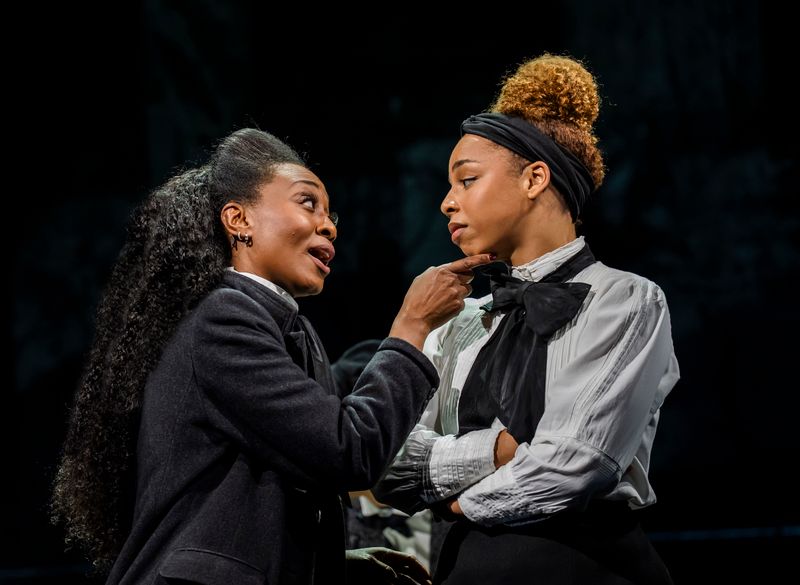
Beverley Knight MBE (Emmeline Pankhurst) and Naomi Katiyo(Sylvia Pankhurst) in 2026 production of Sylvia. Photo by Tristram Kenton.


Tuesday, 22 September 2026

Till the Stars Come Down

 Nottingham Playhouse

19th September 2026, matinee


“I'm not ready for tomorrow. I'm not ready”


The Olivier Award for Best New Play in 2024 was a tight race. Whilst the winner, James Graham’s Dear England, cut through to the wider public in a way that not many plays do, I felt it was too long and sprawling to win. Jez Butterworth’s The Hills of California was a split-time family drama which explored the legacies of abuse and the way we tell stories to shape our lives. Jack Thorne’s theatrical biopic The Motive and The Cue was excellent and probably a more worthy winner than Dear England. And then there was Beth Steel’s Till the Stars Come Down. Another play about sisters (like Butterworth’s), Steel’s hilarious and well-observed comedy of a family wedding in her native Mansfield is a masterpiece. Now receiving its regional premiere at Nottingham Playhouse no less, director Caroline Steinbeis brings the play home in a suitably rowdy production which isn’t afraid to get cheek-by-jowl with the audience.


It’s Sylvia’s wedding day and the family have gathered to celebrate her nuptials to Marek. A wedding is perfect breeding ground for drama: sibling rivalries, long-buried tensions that surface, temptations to give into, a drunk aunt. They provide a crucible for elements that, when combined, spit and crackle. And yet they’re seldom done well. A comedy focusing on working class characters at a wedding has the potential to veer into a cheap farce like Fur Coat, No Knickers. But the compassion Steel has for all of her characters and their well-mined, satisfyingly realised backstories ensures that their class is not the butt of the joke. The love and tensions which underline the relationships between Steel’s characters, particularly the main trio of sisters, is compelling. The first scene portrays the bride getting ready, and it’s the eldest sister Hazel (Emma Pallant) who whips them all into shape. Her husband (Graeme Hawley) is out of work and she’s juggling two kids in addition to taking on the maternal role to her two sisters. She’s just about in control but also looks as if she’s got the world on her shoulders. Whereas Hazel’s a home bird, Maggie (Leah Brotherhead) is flightier. She’s been through several husbands, not visited home in six months and has an underlying dissatisfaction which can lead her astray (the reason she’s not visited soon becomes apparent). Complementing them both is Sylvia, and in AK Golding’s portrayal, we see her kind-heartedness and wide-eyed naivety. There’s enough for a play there in these characters alone, but Steel, who has a fine ear for the Nottingham vernacular, peoples her play with a richly-drawn family.


Their widowed dad (Howard Ward), a retired miner, is imbued with a sadness that he’s giving away his last daughter; seeing her in his wife’s wedding dress, he nearly faints – a reminder that a marriage is more than just a wedding. His 40-year rift with his brother Pete (Joe Alessi) over their different views in the miners strikes comes to the fore in the final acts. The personal and political impact of the miners strikes in Nottingham have been thrillingly dramatised in Steel’s own Wonderland (2014) and Graham’s BBC series Sherwood. Here the strikes are a part of the family’s history, deeply-rooted in these characters and shaping the way the brothers are defined to the rest of their family. And by drawing on real local history, it’s another example of Steel adding texture to her characters. Steel’s skill is her dialogue: we recognise this family and the way they speak. Amazingly, for me, they speak in a way I instantly recognise but seldom hear on stage. This is no more apparent than in Sadie Shimmin’s tour-de-force performance as Aunty Carol. With no airs and graces, Carol gate crashes top table, clears the floor with her rendition of ‘It’s Raining Men’, and becomes more sharp-tongued as the drink flows. But, as much as the dialogue is prosaic, there are moments of poetry as Steel reflects on the insignificance of the characters’ problems against the weight of history and the massiveness of the universe. Alessi’s speech where he recounts all of Nottinghamshire’s mining towns whilst rubbing the rim of a wine glass is particularly moving – and perhaps all the more so performed in Nottingham. And what’s especially nuanced is her ability not to draw easy conclusions. For instance, Sylvia’s groom Marek (Ivan Ivashkin) is Polish and there are tensions about the apparent influx of Polish immigrants in the local area. But at the same, we’re reminded that immigrants have long been a part of the town’s history.


Whereas the original National Theatre production was played in the round, Steinbeis presents the play end-on. Initially, this seems worrying as the first scene, played in front of a curtain, can seem flat. But throughout the play, the playing space (set by Oli Townsend) opens up and the cast warmly includes the stalls as part of the playing space. It’s a decision which pays off. It may seem frenzied but, like with any wedding especially where the characters are so brash, we take the rough with the smooth. There are a multitude of plot twists as the evening progresses and blood is spilt before the evening is out. The three sisters will never be quite the same again, and Steel cleverly hints that these multigenerational tensions will impact the next one too. The whole cast relish their parts. And thanks to Steel and her Chekhovian skill, there’s a lot to relish.


Till the Stars Come Down plays at Nottingham Playhouse until 26th September. For more information, please visit https://nottinghamplayhouse.co.uk/events/till-the-stars-come-down/

Leah Brotherhead, Emma Pallant and Sadie Shimmin in Till the Stars Come Down. Credit: Sam Taylor


Wednesday, 2 September 2026

Barnum

 Curve, Leicester

Tuesday 1st September, 2026


‘There’s a sure-as-shooting sucker born a minute’


Before Hugh Jackman introduced a new generation to the 19th century showman P.T. Barnum in the Disney movie The Greatest Showman, the 1980 musical Barnum brought the big top to Broadway. Juggling song, dance, and circus antics, Jonathan O’Boyle’s revival (originally staged at the Watermill Theatre) is a menagerie of spectacles, uplifting Mark Bramble’s slight book and the nice-but-uninspiring music from the otherwise reliable Cy Coleman.


Taking the form of a 19th Century roadshow, a Ringmaster announces the re-enactment of pivotal scenes from Phineas Taylor Barnum’s life, as he navigates humbles beginnings, marital disputes, showbiz endeavours, and even politics. Key to Barnum’s success is the art of monetising his trademark ‘humbugs’ (read: ‘lies’). For example, he gets his start running a sideshow featuring Joice Heth, the ‘World’s Oldest Woman’, (160 years old, believe it or not…), and when the customers don’t bite, he quickly changes tack, instead selling Heth as George Washington’s nursemaid, which the public eagerly lap up. His ‘exaggerations’ continue in his hiring of ‘General’ Tom Thumb, while he sells tales of ‘four-headed frogs’ and ‘mermaids’ to gullible punters. Stumbling blocks arise in the form of building fires, extra-marital affairs and grief, yet these potentially dramatic events are skimmed over by Bramble, seeming superficial (a bit like Barnum himself). While one could argue this fits the revue style of the musical, I felt that it resulted in a lack of narrative jeopardy.


While Coleman’s music does not reach the heights of his classic score for Sweet Charity, it is infused with the spirited telltale sounds of the circus – bells, kazoos, penny whistles. This brings a great energy to proceedings, which is matched by Michael Stewart’s playful lyrics. This is most evident in the tongue-twisting patter number ‘Museum Song’ which rattles along at an impressive breakneck speed. ‘Join the Circus’ and ‘Black and White’ are also highlights in a serviceable score, injecting a dose of jazz and pizzaz.


While the book and music – entertaining enough – are not the strongest, Barnum’s selling point is most-definitely its spectacle and stagecraft. A team of acrobats adorn the stage, hand-walking and silk-swinging us through scene transitions. The Watermill staple actor-musician element is fitting for the piece, and, as always, I was awestruck by the multi-threat cast. Penny Ashmore compliments her stunning operatic voice, as Swedish superstar Jenny Lind, with some gorgeous harp-playing and balletic poise. Monique Young is sympathetic as Taylor’s long-suffering wife, Charity. Young plays her as an earthy alternative to Barnum’s flighty fancies while maintaining a mischievousness to rival that of her husband. Matt Rawle is all charm as the man himself – witty, impish and always quick with a dazzling smile – he effortlessly portrays Barnum’s inexhaustible zest for life. And he pulled off the famous high-wire walk with aplomb!


Pasek and Paul’s The Greatest Showman has those sought-after ear-worms that have infiltrated popular culture over the last decade, not to mention the gloss afforded by the Disney name, yet Barnum offers an alternative, fittingly rougher depiction of a particular era in American history. The musical feels like an authentic evening at the circus, full of sporadic wonder and the electric tension that arises from seeing stunts accomplished in real-time. The tour is well-worth seeing for the visuals alone, not to mention a highly talented cast putting their all into a highly technical production. As my companion said as we left the theatre – ‘it must be a nightmare to Stage Manage’, so a big shout out to the backstage team too!


Barnum is playing at Curve, Leicester until 5th September as part of a UK tour. For further information, please visit https://www.kenwright.com/productions/barnum-2026-uk-tour/


Matt Rawle as P.T Barnum in Barnum. Credit: Pamela Raith