Tuesday, 18 March 2014

Blithe Spirit


Gielgud, London

15th March, 2014 matinee

Please note that I saw a preview of Blithe Spirit. Opening night was 18th March. This was my first time seeing Blithe Spirit and in fact any Noel Coward play.

Director Michael Blakemore reunites with Angela Lansbury in Noel Coward’s 1941 light-hearted comedy on which they collaborated on Broadway in 2009. It is easy to be waspish about a production where the only superlatives that can be said about it are regarding the names on the poster, but I really did think that the play/ production was very good but rarely went into moments of rhapsodic enthusiasm.

As you enter the auditorium, a black and white projection of a book is on the front gauze with the words ‘Blithe Spirit. An improbable farce by Noel Coward’. It is neatly framed in a box and accompanied by wartime music which helps to set up the performance as quaint. It may be a satire on the upper-middle classes in a Britain drawn to a Downton Abbey culture (see Trevor Nunn article), but it is ultimately a piece of what Michael Billington calls ‘quilted escapism and bourgeois refinement’. Coward said that he wrote the play in five days whilst on holiday (supposedly a stress-free one). It may act as an escape from a wartime Britain, but for all its wit, style and blithe spirit, it never quite reaches the dizzying heights of a great farce.

The plot centres on Charles (Charles Edwards) and his wife of five years Ruth (Janie Dee). They invite the elderly, eccentric and possibly fraudulent Madame Arcati (Lansbury) round for drinks and a séance, simply for entertainment but after some bizarre dancing and collapsing into a trance, Arcati delivers nothing but an upturned table and her insistence that there was a ghostly presence. However, Charles (and only him) starts to see his dead, former wife Elvira (Jemima Rooper) and hilarity ensues. The use of dramatic irony, misunderstandings between characters and apparently floating furniture are certainly funny but I laughed only a few times. However, those times I did laugh were at lines such as ‘I might just as easily have been talking about Joan of Arc but that wouldn't necessarily mean that I wanted her to come and live with me’ and she’ll ‘materialise a hockey team’. They are lines which highlight the ridiculousness of the situation at the expense of the characters’ torment – a sign of a good farce.

Charles Dee is excellent as the pestered widower, as is Jemima Rooper as his tormenting deceased wife and Janie Dee as the wound-up second wife. I didn’t realise that Serena Evans was in the cast and she along with Simon Jones offered fine support. I get the feeling that these characters are by no means a massive stretch for the cast and aren’t meant to be, but they are all performed with stylish Coward-like aplomb. I imagine Angela Lansbury will be the focus of many reviews and she is simply great. She may be miked, she may have her lines fed to her and she seems like she occasionally stumbles, but it adds to Arcati’s age, dottiness and fragility. She’s highly convincing but I might have been too distracted that it was Angela Lansbury of Murder, She Wrote fame to fully think that she was embodying the role. I had heard there was an entry round of applause for Lansbury’s first entrance which was expected however American it may be. However, when the audience are clapping some of her exits with uncertainty, I begin to wonder what sort of polite social performance the audience have entered. But she was certainly enjoyable to watch and was appreciated, certainly by her fans.

There are moments in act one which I found slow. Indeed, an elderly lady sitting next to me fell asleep for part of it and there were more snores heard from further down the row. However, it is pleasantly enjoyable and act two is exciting, with the final moments building up to a satisfying sense of farce and frenzy. With Charles fleeing and the house collapsing around him, his final line of “[p]arting is such sweet sorrow” offers a double meaning like the title and is fittingly casual compared to the chaos around him. Indeed, Simon Higlett’s English country house design has some exciting and theatrically delicious treats. There are also some apparent theatrical in-jokes by Coward, such as mentions of things being a mega flop or it being a ridiculous evening.

As the curtain comes down at the end, there is a black and white projection of Noel Coward, implying that the evening belongs to him, although I imagine the lasting image is also of Angela Lansbury’s presence in the cast. Also worth a notable mention, is Patsy Ferran who is making her West End debut as Edith, the maid and strangely the person who plays a part in the plot’s resolution. I really think that she may have got more laughs than Arcati and really is delightful as the country servant with a military upbringing and youthful eagerness.

I remain cynical of the commercial nature of this production and how it has seemingly been staged around its star drawing in audience members who quite rightly want to see her perform. However, it is also this event casting that helps to make it a pinnacle production and will probably make it remembered as one of those special, 'you had to be there' moments in people's theatre-going memories. And even though I appreciate that it may simply not be my cup of tea, I ultimately stand by the lukewarm response from myself and other audience members. But the four stars (rather than three) that I've given it show how I have succumb to the hype that the production easily draws but does not quite live up to. It is a charming production of a very funny play, but by no means a five star theatre-going experience.

Blithe Spirit plays at the Gielgud Theatre until 7th June, 2014.


Reviews coming up of Dirty Rotten Scoundrels, Mojo, The Book of Mormon, Charlie and the Chocolate Factory, The Curious Incident of the Dog in the Night-Time, Waterbabies, A View from the Bridge, Birdland and more.


Friday, 27 December 2013

2013 in review

It is difficult to sum up 2013’s theatre offerings in one phrase. After 2012 was described as a ‘bloodbath’ for London theatre, the 2013 Olivier Awards certainly reflected a thin choice of new musical nominees. Next year’s, however, will be full of choice as 2013 has seen the premiere of The Commitments, Tim Rice’s From Here to Eternity, Andrew Lloyd Webber’s Stephen Ward the musical, The Light Princess, American Psycho, Charlie and the Chocolate Factory, Once, The Book of Mormon and the launch of next year’s I Can’t Sing – The X Factor Musical. It’s fair to say that all of those musicals have seen mixed reviews and some tepid audience receptions, but it’s excellent that there has been an array of new work in both the private and public sectors.

The West End has seen starry revivals of plays by Ayckbourn, Bennett, Brecht, Pinter, Ibsen, Shakespeare, Noel Coward, Peter Nichols, David Hare, Simon Gray and Jez Butterworth which would make it a notable year for classic and modern classic plays. However, new plays such as Peter Morgan’s The Audience, John Logan’s Peter and Alice and Lucy Kirkwood’s Chimerica will also be well-remembered.

If there was a prize for best producing house this year, it would surely be between the National Theatre for its award-winning production of Othello and unbelievable and memorable celebrations for its 50th anniversary and the Almeida Theatre. The Almeida has earned two West End transfers in Chimerica and Richard Eyre’s production of Ghosts and has also found success in new artistic director Rupert Goold’s production of American Psycho. The National also had a record four of their productions (Curious Incident, Untold Stories, One Man, Two Guvnors and War Horse) in the West End.

2013 has also been a year where artistic directorships have changed with Vicky Featherstone taking over the Royal Court, Gregory Doran having his first full season at the RSC, Rupert Goold replacing Michael Attenborough at the Almeida, Laurie Sansom becoming head of the National Theatre Scotland, Paul Kerryson announcing that he will leave Curve next Christmas and (the most notable of them all) Rufus Norris being announced as Nicholas Hytner’s successor at the National. We have also seen the bulk of Michael Grandage’s starry and successful West End season at the Noel Coward Theatre, but we must not forget the more subtle and perhaps better programmed Trafalgar Transformed Season headed by Jamie Lloyd at the Trafalgar Studios. The season was due to carry on but instead will commence again in the spring.

After much press in the last two years of there not being enough parts for older women, it has been refreshing that there have been stage appearances from Helen Mirren, Judi Dench, Vanessa Redgrave, Zoe Wanamaker, Samantha Bond, Lesley Manville and Sheila Hancock. In fact, Peter Nichols’ Passion Play had six lead characters, four of which were women and five of which were middle-aged.

Regional theatre impressed this year with Piaf and Chicago at Leicester’s Curve, Oliver! at Sheffield’s Crucible, Kenneth Branagh in Macbeth at the MIF and the sell-out RSC production of Richard II with David Tennant. And back in London, it was perhaps a slightly lukewarm year for the Old Vic but they ended it with an acclaimed production of Turgenev’s Fortune’s Fool. The Royal Court also ended the year well with NT Scotland’s production of Let The Right One In, the Young Vic had success with The Scottsboro Boys and the Donmar Warehouse staged some successful productions including Coriolanus and the West End-bound The Weir.

As for award seasons this year, the Whatsonstage.com Awards split opinions as ever, there was some controversy over Lia Williams not being nominated beside Kristin Scott Thomas for Old Times, and the judging panel quit at the London Evening Standard Awards, throwing their prestige and authority into dispute. There was also a terrible incident at the Apollo Theatre where part of the ceiling collapsed, thus sparking a debate over the state and safety of older theatres and what exactly the restoration levy is going into.

Overall, artistically, there have been plenty of theatrical successes in 2013.

I didn’t get to see Othello, Chimerica or Ghosts but here are some of my year’s highlights in no particular order:

1.      Quartermaine’s Terms (Wyndham’s) – Richard Eyre’s finely directed revival had an excellent cast led by Rowan Atkinson. Its gentle humour and poignancy struck a chord. As St John would say, it was ‘terrific’!

2.      The Book of Mormon (Prince of Wales) – So it may have got a mixed reception from the critics, but I found the hit Broadway musical to be hilarious and have exhilarating songs. I would pick it as Best New Musical of the year.

3.      Passion Play (Duke of York’s) – Brilliantly directed, great cast, theatrically exciting and very moving. Zoe Wanamaker is one of my favourite actors but the whole cast impressed. Samantha Bond and Oliver Cotton gave superior performances and Owen Teale gave one of the most honest performances I’ve seen this year.

4.      The Audience (Gielgud) – Some scenes may have been forgettable and it was quite self-indulgent, but I enjoyed its theatricality and knockout performances.

5.      Mojo (Harold Pinter) – An excellent revival of Jez Butterworth’s first professional play. Very funny and tense. Daniel Mays and Ben Whishaw gave stand out performances and Ultz’s set of this imagined 1950s’ Soho was very impressive.

6.      Curious Incident of the Dog in the Night-Time (Apollo) – Its theatrical ingenuity and protagonist’s take on the world was extremely impressive. I recommend everyone to go and see it.

7.      Peter and Alice (Noel Coward) – At the time, I found the play to be not very unique somehow, but its sentiment, fine performances and excellent direction and design have stayed with me. I also applaud the Michael Grandage Season and the great number of cheaper tickets.


A happy and healthy New Year!

Monday, 11 November 2013

Twelve Angry Men


Birmingham Rep Theatre, prior to West End run

5th October, 2013

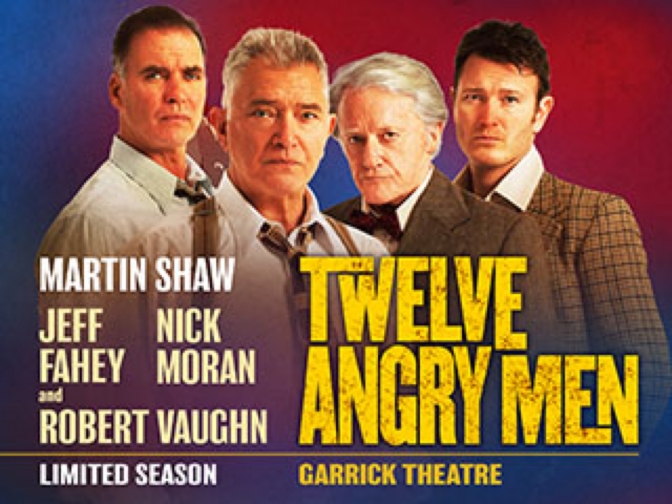
This was only the second performance of Christopher Haydon’s production before a short tour and a run now at the Garrick Theatre, London.

The newly-refurbished Birmingham Repertory Theatre first opened to the tour of Alan Bennett’s newest, excellent play People this Autumn. It now acts as the opening venue for this starry production of Reginald Rose’s 1954 television play, adapted for the stage the following year and then famously into a film starring Henry Fonda in 1957.

Probably most famous as a film, this play is extremely naturalistic. It is closely set in real time and sees 12 New York jurors locked in a room with the task of deciding whether a young man is guilty of murdering his father. Initially, all the evidence points to a guilty vote but in an early vote, the persistent juror no.8 says that he is ‘not guilty’ meaning they all have to reluctantly stay in this stuffy room and unpick the details of the case. Soon, it completely falls apart and one by one, the jurors change their mind.

It was an extremely assured performance from only the second time in front of an audience and will surely have got better before the West End run. However, the opening ten minutes or so could have done with some tightening but the opening of most plays is dedicated to getting to know the characters and situation so the decision for the characters to settle into the room by opening windows and their collar buttons while getting into it is an apt one.

Listening is certainly important in this play but the argument is played out with utter captivation. What is most enjoyable is hearing the argument against the accused fall apart. From seeing a duplicate knife of the supposedly unique murder weapon brought into the room and slammed down onto the table to seeing juror no.8 act out how long it would take an elderly neighbour to get from their bed to the front door to see the murderer run off. Another fascinatingly theatrical moment that gives the audience chills is the discussion of whether saying ‘I’ll kill him’ is always meant as taken. Juror no.3 is adamant that it does until angered by juror no.8 which eventually leads no.3 to say it himself. This marks the end of the act and the pause and blackout leaves us and juror no.3 realising that our words aren’t always justified with actions.

Martin Shaw seemed to be enjoying himself giving a strong performance as the resilient and persuasive juror no.8. But it is Jeff Fahey’s juror no.3 that really stands out as a gutsy stage performance. He is the juror who is the last to change his mind and although it seems a little contrived for him to be so adamant that the boy is guilty because his relationship with his own son isn’t good, Fahey still gives a superbly powerful performance. The magnificent Robert Vaughn was a little unsure of his lines at this early performance but another cast member prompted him followed by nods of agreement by other cast members. How excellently this was handled is testament to what a compelling production this is. The only slight criticism with the casting is that you can hardly tell who anyone is due to the abundance of them on stage!

Michael Pavelka’s unnaturalistic set reminds us that we are in a theatre. The doors, windows, radiators, bathroom and even light switches keep the set detailed but the lack of walls and strong presence of a lighting rig to hold it together reminds me of Pavelka’s set for Propeller’s The Comedy of Errors a few years ago. We could sometimes think we are watching a film, but this design gives the production an element of theatricality. There is also a slight revolve which is effectively used and some nice rain-effects. Before the performance and during the interval, New York street sounds played in the auditorium help place us in the heat of the city.

The ensemble cast work brilliantly together, with Nick Moran and Miles Richardson also standing out. This recommended, compelling drama should do well in the West End and marks another success for producer Nica Burns and a well-deserved one for Bill Kenwright Productions. This is a classy and thought-provoking court room play.


Twelve Angry Men runs at the Garrick Theatre until 1st March, 2014.

Tuesday, 29 October 2013

Blood Brothers UK Autumn tour 2013


Being in the audience at the last night of Blood Brothers at the Phoenix last year was one of my most memorable evenings in a theatre. However, almost a year after it closed in the West End, the touring production of Blood Brothers returns to its home of Liverpool to packed out standing ovations at each performance. We saw the midweek matinee at the Oxford New Theatre back in September.

‘If you haven’t seen it go… if you have, go again’ is the press quote so often used on the posters for Bill Kenwright’s and Bob Tomson’s production of Willy Russell’s epic musical of class and superstition. This current tour proves that now is certainly the time to see it as it is better than ever. Original narrator Warwick Evans returned to the show back in April (when we saw it twice) after the final fortnight in London last year. He plays this everyman character with a dark side as well as compassion and his voice stands out just as well as it does on the 1988 and 1995 cast recordings. His renditions of Shoes upon the Table and Madman (which I have seen live five times now) are different every time and are simply brilliant. The dulcet tones of Mr. Evans are no less compelling in Summer Sequence, in which Russell explores the elations and misbegotten dreams of growing up. And finally in the closing moments before the ever-powerful and strangely rousing Tell Me It’s Not True, Evans looks down at the bodies, his voice breaking, gives a fist of solidarity and walks away before stopping himself when hearing Mrs. Johnstone’s opening lines of the song. For GCSE students who still believe that the narrator represents the devil, you need to see the utter humanity of Evans’ portrayal which exemplifies what a complex character it is. Not meaning to shadow any other cast member of the show, it is worth seeing for him alone. Let’s hope that they ask him to return to the tour next year as well.

Maureen Nolan, one of the finest Mrs. Johnstones, gives a powerhouse of a performance and shows that her acting range is just as strong as her singing range. I’m glad she can finally play the role in Liverpool! Original Broadway Eddie, Mark Hutchinson, brings out humour and a touching nature of a role normally shadowed by the fast-becoming definitive Mickey, Sean Jones. Olivia Sloyan also does as fine a job as former long-running cast members Jan Graveson and Louise Clayton as the unsung girl in the middle of the pair. Sloyan’s Linda brings warmth as well as humour and devastation. Of the supporting cast members, Graham Martin, Daniel Taylor and Tim Churchill stand out amongst this extremely impressive company.

Since I last saw it in April, the programmes have been nicely uplifted and the band sound extremely strong. I’m not sure if new Musical Supervisor Tom de Keyser has made changes, but the drums in Shoes upon the Table were excellently striking and the guitar staccato in Summer Sequence was nicely touching.

For such a long-runner to be this fresh and popular is testament to the work happening on and off stage and the power of having original cast members return to a production brings this much-loved show back to its roots as well as keeping it moving forward. Maybe it is time the producers rest the News of the World quote from above as there are many other superlatives about this show. And here’s another: if you never see another piece of theatre, then go and see Blood Brothers.


Blood Brothers is touring the UK into 2014.

Friday, 27 September 2013

Much Ado About Nothing


Old Vic, London
21st September, 2013, matinee

In an interview with Mark Lawson at the Criterion Theatre, the incredible actor/ director Mark Rylance announced that he planned to do Much Ado About Nothing with Vanessa Redgrave and James Earl Jones after seeing them on Broadway in Driving Miss Daisy. After much anticipation and press regarding their age, it opened last week at the Old Vic to mainly terrible reviews, perhaps leaving people wishing that he hadn’t suggested it. However, I say that some of the criticism was unfair and would recommend it for Redgrave’s and many of the supporting cast’s performances.

It is usually the case that Benedick and Beatrice are played by actors in their forties rather than their 70s (Redgrave) and 80s (Earl Jones). But the idea that you are never too old for love is true and at times it really doesn’t matter that these two reluctant and bantering lovers are pensioners. At other times though, it does make Rylance’s production a little senseless. Firstly, you wonder what this 82 year-old Benedick has been doing in the war to prove so helpful to Claudio. Also, when Leonato tells his niece Beatrice (who looks older than him) ‘By my troth, niece, thou wilt never get thee a husband if thou be so shrewd of thy tongue,’ (II.i) you can’t help but be a little surprised that they are still trying to find her one. But other than that, the age ‘matter’ doesn’t really get in the way.

Rylance’s concept works well and it helps to explain the casting: he transports Messina to a WWII English village with American troops visiting. Ultz’s design has said to be dull and not the most aesthetically exciting but it certainly is striking. From the second row of the stalls, you can see up into the well-lit brick fly tower, which further makes the design look more impressive. The design is largely wooden-looking with a giant inset box which some have said carries the look of a Wagamama’s table. I’m not sure if it helps the acoustics and it is pretty hard to analyse but it certainly provides shelter which is useful for scenes set in more private places and also sets up some hiding places. To be honest, it reminds me of what the Sam Wanamaker Playhouse might look like next year and the whole production certainly does have a Shakespeare’s Globe feel about it. The staging is mainly lively and open and the front few rows are lit to help protrude the performance space into the audience space.

I did wonder if the age of Redgrave and Earl Jones would stop the famously funny gulling scenes from being as active as major productions from recent years and I’m afraid they do come across as a little disappointing. Unlike some reviews, I can say that you can see some of Benedick’s and Beatrice’s reactions but for most of the scenes, they are either hiding in or behind a wagon. It does bring a moment of joy, however, when Redgrave leans forward and directly asks an audience member “if this is true?” and by not seeing their reactions, it does allow more focus to go on the other players who are excellent in these scenes.

A moment of delight in this production comes from the Dogberry/ Watchmen scenes. Peter Wight’s English Bobby Dogberry (with a touch of a Northern accent) is very funny and plays well off of Tim Barlow’s elderly Salvation Army officer Verges. His dance moves behind a Bluesy version of ‘Sign No More’ are eye-catchingly hilarious, if not a little milked. The other watchmen are played by children scouts and the scene where they catch Borachio in an apparently dark barn provide a moment of action equal to something you might see at Shakespeare’s Globe in the sense that it’s fun, spirited and induces a lively reaction from the audience. It is interesting that Dogberry doubles with the calm Friar Francis as both are characters who seek peace.

Vanessa Redgrave is on fine form! It was my first time seeing her on stage and I was surprised by how warm, rich and spirited her voice is. Her gesture to the sky on ‘but then there was a star danced, and under that I was born’ is magical and makes you aware that you are in the presence of a great (II.i). An extra layer of interest is added here because Redgrave’s birth was announced on the Old Vic stage after a performance of Hamlet.

James Earl Jones, sadly, lets the production down in my opinion. He has a great voice and his Benedick has charm but there are times when his diction is bad and I felt that his struggles with his lines got in the way of his character. Comparing him to many other (albeit younger) Benedicks, he is often sitting down which halts the pace and energy of the play. I could be wrong but one of his final speeches was got through with repeating bits and I don’t think that he carried on after “and that is my conclusion” even though there are other lines in the script.

An ironic edge is added to Benedick’s ‘the world must be peopled’ which is fine as it does receive a knowing laugh. Quentin Letts criticised the fact that Beatrice’s ‘Kill Claudio!’ got a laugh but that is not an uncommon reaction. Afterall, a laugh does relieve the tension that the severity of the line brings if put into reality.

Many of the supporting cast are excellent. Michael Elwyn (who didn’t have much stage time in The Audience) makes for an excellent Leonato. He spits with anger in the wedding scene as he chases Hero around the stage and carries a particularly powerful performance all the way through. It is a shame that Beth Cooke’s Hero and Lloyd Everitt’s Claudio neither particularly stand out but maybe the former does when being accused in the wedding scene and is being held by Redgrave. Melody Grove’s East London Margaret is extremely impressive as is Ben Kingsley-Adir’s Borachio. Alan David (of Jerusalem fame with Rylance) is excellent as is Danny Lee Wynter’s highly convincing Don John. He wears a scar on his left cheek as if to physically convey a bitterness and perhaps jealousy which reflects the character’s darker side. James Garnon’s masterful Don Pedro also impresses.

There seems to be a major production of Much Ado every couple of years or so, but maybe this ill-reviewed production will make producers wait a little while. I was a little disappointed that there was no symbolism about noting or things being resolved. Although it might seem a little contrived, the eventually-solved Rubik’s Cube at the end of Josie Rourke’s West End production was a neat touch. The Old Vic, its programmes and its front of house staff were as friendly and beautiful as ever.

I suppose it is a good thing that someone can suggest a play and an interesting cast choice and then for it to happen, but maybe in this case it shouldn’t have done (some might say). However, for £14 for the second row of the stalls, I can’t really complain. At times, this production seems a little messy, but Redgrave makes it very special as do many other members of the cast. As long as you’re not paying top dollar for it, I reckon that in some way or other, it is a must see.


Much Ado About Nothing runs at the Old Vic Theatre until 30th November, 2013.


Monday, 16 September 2013

Barking in Essex


Wyndham’s Theatre

14th September 2013 matinee – penultimate preview

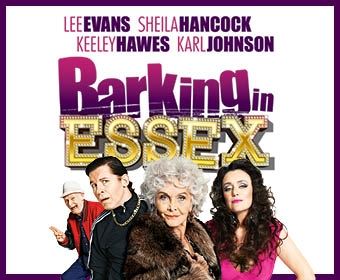
Finally, after all of the hype and anticipation, we met the Packers. Lee Evans, Sheila Hancock, Keeley Hawes, Karl Johnson and Montserrat Lombard star in a new comedy by late writer Clive Exton which tells the simple yet effective story of Essex crime family the Packers. Algie Packer is soon to be released from prison but his family have spent the £3.5 million that they were supposed to be safekeeping, thus leaving them ready to flee their mansion of a home. But before they have the chance, Algie’s new love Allegra Tennyson has arrived wanting the key to the safe deposit box. With the Packers assuming she is simply after the money they decide to hire their elderly hit man of a neighbour Rocco to deal with her. By the end of act one they find themselves with a corpse, a shot man and a note confirming that Allegra was in fact genuinely Algie’s partner.

The plot has understandably been likened to Only Fools and Horses and does have hilarious moments but sadly does not live up to its billing as a riotous comedy. The only thing that perhaps is riotous about it is the amount of swearing. Although it is funny at times, in my opinion if you find bad language titillating you need to get out more. Act one opens with classical music and the revealing of Simon Higlett’s spectacular set which stinks of wealth and new money. When the word ‘cunt’ is repeated several times in the opening lines, humour is created from the culture clash of it being a word perhaps not expected to be heard. Later on, when Chrissie calls ‘where is that cunt?’ followed by Evans’ deflated reply of ‘I’m here’ it is again funny but does begin to get old. I felt that if the ‘cunts’ and ‘fucks’ were taken out, many of the laughs would be too.

The second act is set in the sort of place where the Packers belong: a poxy flat that is the antithesis to act one’s setting. There’s a brilliant joke in this act where after a great number of suggestions both in the design and in the text that they are in a Peruvian dump worthy of something out of Banged Up Abroad, in actual fact they are more close to home. It’s a joke that perhaps didn’t get the laugh it deserves, maybe because of the many hints of them being somewhere else, hints that strongly show the ignorance of the Packers.

Exton brilliantly shows that with a family who are willing to turn on each other and who have completely lost their moral compass, things can go wrong. For the characters in Barking in Essex, death is the only way of stopping them, and (trying not to reveal too much) once we hear Algie arrive at the flat and the lights go down on a desperate Darnley, there is a suggestion that he will take the same way out. Emmie implores ‘Feelings. Go on feelings’ and mocks morals as being weak and religious but it is Darnley who recognises that ‘you’ve got to have rules’ as a family and that recklessness is simply not enough. Although there is bathos at the end, I felt the script could have been more effective and specific and also wondered if it was not perhaps unique.

The Packers are a family that represent everything that they mock and criticise. ‘She’s filth. Definite filth’ Chrissie Packer accuses of Allegra after demonstrating much worse aspects herself along with Emmie’s criticism of ‘nice language’ because of a few swear words, completely ignorant to her own torrent of expletives. And in the second act she accuses incest on the locals when the Packers themselves are not exactly innocent in that respect.

Exton’s widow Mara writes in the programme that he was fascinated with the English vernacular and I feel he’s captured it extremely well. What he creates feels extremely relevant and reflects what some people are really like today. Evans has said that you can easily replace the Packers with bankers or politicians but by setting the play in Essex perhaps does criticise the shallowness, hypocrisy and greed of anyone (including ordinary people) in today’s society.

The play is excellently-acted all round, particularly from Lee Evans as the layabout Darnley, the only Packer with any redeeming features in that he puts an end (albeit cruelly) to the amoral so-called family. With just a single look he can evoke laughter but as done before in The Dumb Waiter and Endgame also shows his versatility as an actor, particularly in those final moments. Sheila Hancock is hilarious as the mother who can both be callous and motherly. She superbly plays the matriarch of the family but I wondered if the final moments of Emmie’s downfall could be more roundly and deeply played. Keeley Hawes is highly convincing as Darnley’s money-grabbing wife (and sister) whose hunger for fame and a celebrity lifestyle soon leaves her dead – an act which seems quite apt and interesting when seeing talentless, real-life wannabes on the television now. Karl Johnson is impressive as Rocco, who longs for a quiet life rather than the one he lives, but it is hard to ignore the far superior Noises Off that he was in last year.

When the play was announced a year ago I imagined a farce that made the best use of Evans’ skills in physical comedy but although Harry Burton’s production allows for moments of physical humour, it did feel a little crowbarred in.

Some might see this as a very commercial piece of theatre drawing on the recent popularity that TOWIE has brought Essex as well as the star casting bringing in audiences. But any show that brings new audiences into the West End should be applauded. However, many other productions also try to do this but with large numbers of cheaper tickets and day seats. Barking in Essex does neither, but I still do recommend it. Very nearly four stars!


Barking in Essex runs at the Wyndham’s Theatre until 4th January, 2014.


Monday, 2 September 2013

Autumn Highlights

The Cripple of Inishmaan, Barnum, Sweet Bird of Youth, A Chorus Line, Relatively Speaking, Strange Interlude and Titanic all closed this weekend thus making room for new productions to open and therefore raise the curtain (apologies) on an Autumn of exciting London theatre. Here are just some of the highlights:

Tonight not only marks a cast change for the National’s hit The Curious Incident of the Dog in the Night-Time at the Apollo but also a busy Autumn for the National as it celebrates its 50th anniversary. The occasion will be marked with an evening of special performances from the past 50 years involving Judi Dench, Simon Russell Beale, Rory Kinnear and many other guests as well as being broadcast live on 2nd November on BBC 2. NT Live will help celebrate the anniversary with encore screenings of Hamlet, The Habit of Art and Frankenstein. The Autumn highlights from the Southbank include Marlowe’s Edward II and Tori Amos’ new musical The Light Princess and I imagine that Nicholas Hytner’s successor as Artistic Director will also be chosen in the coming months.

The Michael Grandage Season moves onto its final two productions with Shakespeare’s A Midsummer Night’s Dream with Sheridan Smith as Titania and David Walliams as Bottom followed by Jude Law playing the title role in Henry V. The other highly-anticipated Shakespeare productions of the Autumn come from David Tennant’s Richard II (dir. Gregory Doran) at the RSC and their former home of The Barbican and Mark Rylance’s production of Much Ado About Nothing at the Old Vic starring older-than-usual Benedick and Beatrice James Earl Jones and Vanessa Redgrave.

Back to the West End and after all of the hype, it will finally be time to #MeetThePackers with Clive Exton’s new comedy Barking in Essex with Lee Evans, Sheila Hancock, Keeley Hawes and Karl Johnson at the Whyndam’s. From the end of October, Hawes’ husband Matthew Macfadyen joins Stephen Mangan in a new Jeeves and Wooster play Perfect Nonsense at the Duke of York’s and a star-studded revival of Jez Butterworth’s Mojo at the Harold Pinter Theatre. Perhaps a nice surprise is that three new musicals open in the West End this Autumn with the highly-anticipated Jamie Lloyd production of Roddy Doyle’s The Commitments opening at the Palace, the surprisingly low-key new Tim Rice musical From Here to Eternity at the Shaftesbury and the new Andrew Lloyd-Webber musical about the Profumo Affair Stephen Ward the Musical at the Aldwych.

The Menier Chocolate Factory have today announced that their Christmas musical will be Leonard Bernstein’s Candide (Or Optimism) based on the novel by Voltaire but there are still some other theatres to announce productions before the end of the year. Namely, the Old Vic has yet to announce their Christmas show and the Trafalgar Transformed season still has to announce their fourth production.

According to the ATG website, The Ladykillers has extended through Christmas and it is looking likely that Reginald Roses’ Twelve Angry Men will transfer from the Birmingham Rep to the Garrick Theatre starring Martin Shaw and Robert Vaughn. After the anticipated transfer of Barnum from Chichester fell through, the Gielgud lies empty apart from a rumour of Strangers on a Train, but speaking of Chichester, their successful production The Resistible Rise of Arturo Ui opens at the Duchess this month.

Vicky Featherstone continues her first season at the Royal Court by presenting John Tiffany’s visually exciting and disturbing production of Let the Right One In. Based on a Swedish coming-of-age novel and first produced at the National Theatre of Scotland earlier this year, there is promise for this production to have a longer run. In December, Tom Hiddleston plays the title role in Shakespeare’s Coriolanus at the Donmar Warehouse which will be screened as part of NT Live next year and the Royal Opera House have their first West End transfer with The Wind in the Willows at the Duchess.


London theatre is nearly always exciting but the coming months promise something for everyone.